

When people talk about food machinery, the discussion often becomes confusing very quickly. There are many machine names, many suppliers, and many technical terms. It becomes hard to understand which machines are actually needed for a specific product or process.
In this article, we will explore how food machinery is classified, the main functions of key equipment, and how to choose the right machines for your production needs.
What Is Food Processing Machinery?
Food processing machinery is industrial equipment used to handle, prepare, and transform raw food materials into finished products. It performs processes such as washing, cutting, mixing, heating, cooling, and packaging to support efficient, safe, and consistent food production.
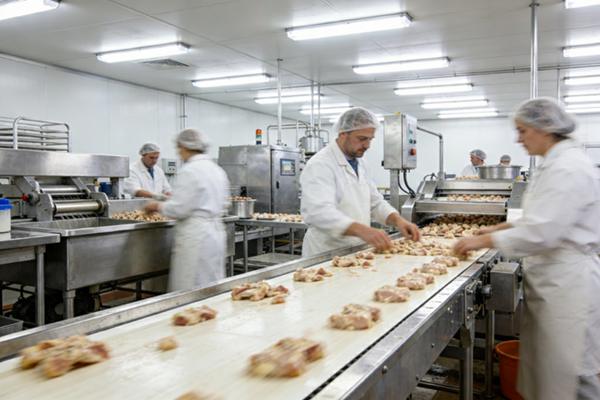
Classification of Food Processing Machinery
Food machinery is mainly classified in two ways: by the type of product being processed and by the processing stage.
Classified By Product Type:
1. Fruit and Vegetable Processing Machinery
-
Washing machines – remove soil, sand, and surface contaminants
-
Sorting and grading machines – classify products by size, weight, or appearance
-
Peeling machines – remove skin or outer layers
-
Cutting and slicing machines – produce consistent size and shape for downstream use
-
Dewatering machines- Remove excess surface water after washing
-
Blanchers – apply short-time heat treatment to inactivate enzymes and stabilize color
-
Dehydration machines- remove moisture to extend shelf life and achieve required texture
2. Meat and Poultry Processing Machinery
Meat processing machinery is often the most confusing category, as many machines look similar and are sometimes referred to by similar names.
-
Meat bowl cutters – finely chop meat and fat to produce emulsified or finely comminuted products
-
Meat dicing machines – cut meat into uniform cubes with controlled size
-
Meat grinders – reduce meat into minced or ground form
-
Meat mixers – mix meat with salt, spices, and additives to achieve uniform distribution
-
Meat tumblers – gently tumble meat to improve seasoning absorption, texture, and moisture retention
-
Brine injection machines – inject curing or seasoning solution evenly into meat
-
Meat forming machines – shape meat or minced meat into defined forms such as patties or blocks
-
Smoking houses – apply controlled smoke and heat treatment to develop flavor, color, and shelf life
3. Seafood Processing Machinery
-
Washing machines – remove slime, blood, and surface contaminants from seafood
-
Sorting and grading machines – classify seafood by size, weight, or species
-
Descaling machines – remove fish scales
-
Heading and gutting machines – remove heads and internal organs from fish
-
Filleting machines – separate fillets from the backbone
-
Trimming tables and conveyors – support manual trimming and defect removal
4. Dairy Processing Machinery
-
Pasteurizers – apply heat treatment to reduce microbial load and ensure food safety
-
Homogenizers – reduce fat globule size to improve product stability and texture
-
Mixing tanks – mix milk with sugar, flavors, or stabilizers
-
CIP systems – clean processing equipment and pipelines without disassembly
-
Aseptic or hygienic filling machines – fill liquid dairy products into packages under controlled conditions
-
Cooling systems – rapidly cool products after heat treatment to maintain quality
5. Bakery and Prepared Food Machinery
-
Ingredient dosing systems – weigh and feed raw materials accurately into the process
-
Mixers – combine ingredients to achieve uniform dough or batter
-
Dough sheeters and laminators – form dough into controlled thickness and layered structure
-
Forming machines – shape dough or prepared food into defined forms
-
Ovens – apply controlled baking to develop structure, color, and flavor
-
Fryers – cook products in oil with controlled time and temperature
-
Cookers and steamers – apply moist heat treatment for prepared foods
Some machines, such as packaging machines, freezing machine and sorting tables, are used across many product categories. They are not listed in each section, but they are still part of most food processing lines.
Classified By Processing Stage:
1. Pre-Processing Equipment
Pre-processing prepares raw materials for further steps. It focuses on cleaning, inspection, and basic handling.
2. Primary Processing Equipment
Primary processing equipment is used to change the physical form of raw materials through cutting, slicing, grinding, mixing, or forming.
3. Further Processing Equipment
Further processing equipment adds value to the product. It changes texture, flavor, or structure through thermal or physical treatment,such as cooking, frying, baking, smoking, marination, or coating..
4. Freezing and Cooling Equipment
Freezing and cooling equipment controls temperature to preserve freshness and extend shelf life. Common types include chillers, blast freezers, IQF freezers, and spiral freezers.
5. Packaging Equipment
Packaging equipment is used to protect food products and prepare them for storage and distribution. Common types include filling machines, vacuum packaging machines, and tray sealing machines.
6. Auxiliary and Hygiene Equipment
Some equipment does not directly process food but plays a critical role in plant operation.
-
Crate and Container Washing Systems
Clean crates, trays, pallets, and other containers used in the plant. Reduce cross-contamination and support hygiene audits. -
Hygiene Control Equipment
Boot washers, hand wash stations, and sanitation gates control personnel hygiene. These are often required to meet food safety standards.
Although they do not increase output directly, they reduce risk and support stable operation.
Benefits of Food Processing Machinery
-
Improve production efficiency – reduce manual labor and increase output
-
Ensure consistent product quality – control size, shape, and processing conditions
-
Improve food safety – reduce contamination through controlled processing and hygiene design
-
Reduce labor dependence – lower reliance on skilled manual operations
-
Support large-scale production – enable stable and continuous processing
-
Reduce raw material loss – improve yield through controlled cutting and handling
-
Improve process control – allow stable and repeatable processing parameters
-
Extend product shelf life – apply heat, cooling, or freezing in a controlled way
-
Improve working conditions – reduce heavy, repetitive, or unsafe manual work
How to Choose Food Processing Machinery?
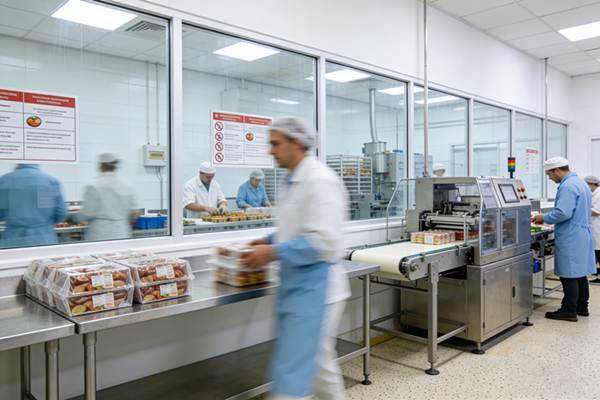
Choosing food machinery is not only about specifications. It is about how well the machine fits into the whole process.
In factories, equipment works as part of a system, and its performance affects the next step. A wrong choice does not only affect that machine. It can limit output, raise labor cost, or create hygiene risks across the line.
Key selection principles:
- Define the product first
Equipment choice depends on the product being processed and its quality needs. For example, when selecting meat processing machines, it is important to know whether the meat is fresh or frozen and whether it contains bones.
- Set a clear output target
Always plan for peak load, not average daily output.
- Match the machine to the process stage
Each machine should fit its role in the processing flow.
- Check system compatibility
Height, speed, and connection points must match upstream and downstream machines.
- Consider cleaning and hygiene
Easy cleaning and open design reduce downtime and hygiene risk.
- Plan for maintenance access
Wear parts should be easy to reach and replace.
- Leave room for future growth
Equipment should allow capacity upgrades or line expansion.
Conclusion
Food machinery selection is a system decision, not a single purchase. Understanding how equipment is classified helps you make clearer, safer, and more effective choices for long-term production.
Mecceed focuses on providing tailored food processing solutions by considering your specific process details, space limits, and production targets. If needed, please contact us at [email protected].