

As the global population grows and more people focus on healthy eating, chicken has become one of the most widely consumed meats in the world. It is high in protein, low in fat, and relatively affordable, which makes it popular in retail and food processing markets.
However, chicken is highly perishable and can easily be affected by bacteria and oxidation. Proper packaging is essential to protect product quality, extend shelf life, and ensure safe transportation and storage.
In this article, we will introduce common chicken packaging methods, packaging machines, and how to choose the right equipment for chicken packaging.
Why Chicken Packaging Is Important
Chicken packaging serves several important purposes in the poultry processing industry:
-
Extend shelf life
Even under refrigerated conditions, chicken can still grow bacteria easily. Therefore, the packaging needs to control the oxygen level and slow down microbial growth. This helps extend the product’s shelf life. -
Ensure food safety
Packaging helps prevent outside contamination and keeps a good seal. -
Improve product display
Clear and transparent packaging can show the freshness and quality of the product. This makes the product more attractive. -
Protect products during transportation
Proper packaging helps protect chicken products during handling, storage, and transportation.
Common Chicken Packaging Methods
Depending on the product type and sales channel, chicken products usually use several main packaging methods.
1. Vacuum packaging
Vacuum packaging is one of the most common methods for chicken products. This technology removes the air inside the package and lowers the oxygen level. This helps slow down bacterial growth and fat oxidation.
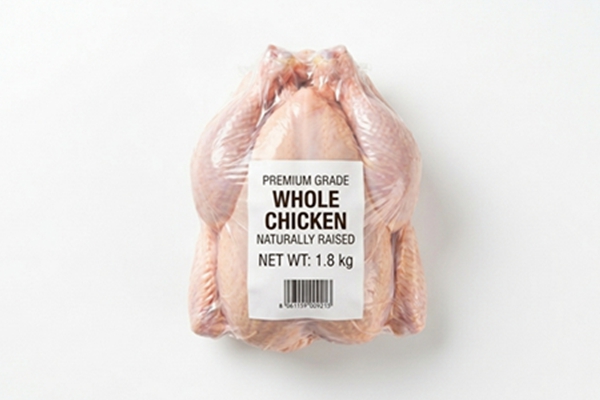
Vacuum packaging has several advantages:
- Reduces oxidation and color change
- Prevents freezer burn
- Strong sealing, suitable for transport and storage
This method is widely used for:
- Whole chicken
- Chicken breast
- Chicken legs
- Frozen chicken products
2. Modified atmosphere packaging (MAP)
Modified Atmosphere Packaging, or MAP, is a packaging technology that has become widely used in the retail market in recent years. This method replaces the air inside the package with a specific mix of protective gases, usually carbon dioxide and nitrogen, and sometimes oxygen. This helps slow down microbial growth and maintain product freshness.
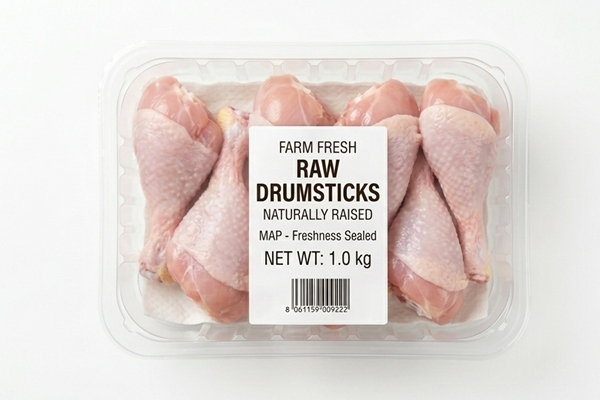
Main features of MAP include:
- Helps maintain the natural color of chicken
- Improves retail display
- Suitable for supermarket tray packaging
3. Vacuum skin packaging (VSP)
Vacuum Skin Packaging is a high-end retail packaging method. During the process, a transparent film tightly covers the product under vacuum. The film sticks closely to the product and the tray, holding the product firmly in place.
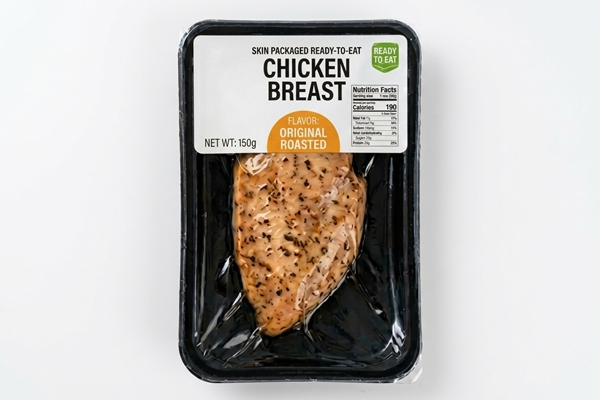
Advantages of this packaging include:
- Excellent product display
- Prevents liquid leakage
- Keeps the product firmly fixed
This type of packaging is often used in:
- High-end supermarkets
- Premium meat products
Packaging Solutions for Different Chicken Products
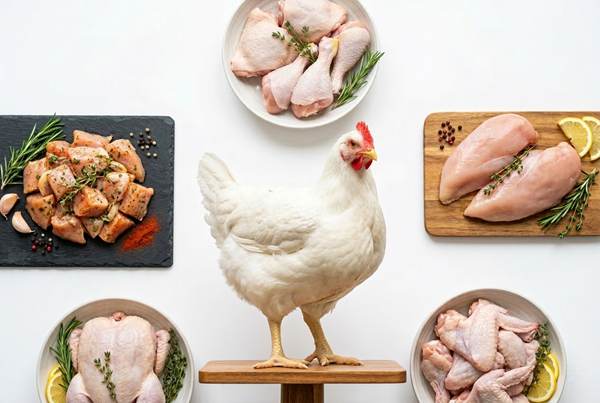
Different chicken products often require different packaging solutions. Factors such as product form, storage conditions, and sales channels can all influence the choice of packaging method.
-
Whole chicken
Usually sold as frozen or chilled products. Vacuum packaging is commonly used because it provides strong sealing and helps protect the product during transportation and storage. -
Chicken breasts and chicken cuts
Widely sold in retail markets. These products are often packed in trays with modified atmosphere packaging (MAP) to maintain freshness and improve product presentation. -
Marinated or processed chicken products
Typically packed in vacuum bags or premade pouches. This type of packaging helps keep the marinade inside the package and prevents leakage during transportation. -
Retail-ready chicken products
For premium retail markets, vacuum skin packaging is becoming increasingly popular. This packaging format provides better product visibility and keeps the chicken firmly fixed in the package.
By selecting the appropriate packaging method for each product type, poultry processors can better protect product quality and meet different market requirements.
Chicken Packaging Machines
1. Double Chamber Vacuum Packaging Machine
This machine has two vacuum chambers that work alternately. While one chamber performs vacuum and sealing, the other chamber can be used for loading products into bags. This helps improve production efficiency.
Main machine features:
- Easy to operate
- Suitable for different product sizes
- Low initial cost
- Good for small and medium production
2. Premade Pouch Packaging Machine
A premade pouch packaging machine has a higher level of automation. The machine uses pre-made bags and can automatically pick up the bag, open it, fill the product, and seal it. It can also be equipped with a vacuum function.
This type of equipment has several advantages:
- Higher level of automation
- Higher packaging efficiency
- Stable packaging quality
3. Tray Sealing Machine
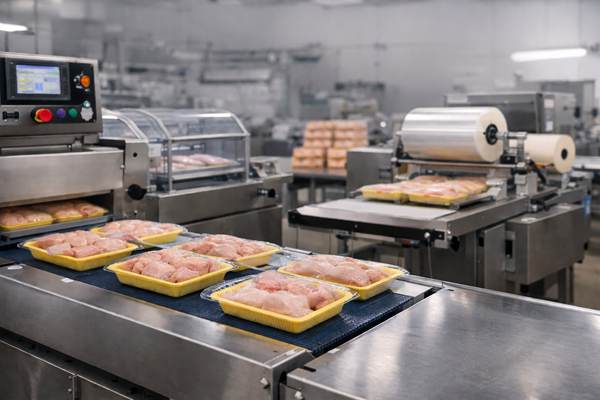
Tray sealing machines are commonly used for packaging fresh chicken products in pre-formed trays. The machine seals a top film over the tray and can also be equipped with modified atmosphere packaging (MAP) to extend shelf life.
This type of packaging equipment is widely used for retail-ready chicken products sold in supermarkets.
4. Vacuum Skin Packaging Machine
Vacuum skin packaging machines are designed to create skin packaging using pre-formed trays and top films. The film tightly covers the product and the tray, creating an attractive retail presentation.
This type of packaging is often used for premium poultry products in retail markets.
5. Thermoforming Packaging Machine
A thermoforming packaging machine is a highly automated packaging system. It is widely used in large food processing plants.
The machine heats the bottom film and forms it into packaging cavities. After that, the product is placed inside. The package is then sealed using vacuum or gas filling technology. Finally, the machine cuts the packages into individual packs.
A thermoforming packaging machine can be configured to produce different types of packaging, such as vacuum packaging, modified atmosphere packaging, or vacuum skin packaging, depending on requirements.
This equipment is suitable for large-scale continuous production and offers several advantages:
- High level of automation
- High production efficiency
- Consistent packaging quality
- Better material usage
By choosing the right chicken packaging machine, poultry processors can improve production efficiency and better meet different market requirements.
How to Choose the Right Chicken Packaging Equipment
1. Identify Your Product Type
Understand the type of chicken product you want to pack, such as whole chicken, chicken breast, chicken legs, or cut chicken parts. Consider whether the product is chilled or frozen, and whether it is marinated or prepared.
2. Choose the Right Packaging Method
Common options include:
- Vacuum packaging – good for longer shelf life and frozen products
- Modified atmosphere packaging (MAP) – often used for fresh retail chicken
- Vacuum skin packaging – provides a premium retail appearance
Choose the method that fits your product and target market.
3. Select Suitable Packaging Materials
Packaging equipment also depends on the materials you plan to use.
Common materials include:
- Thermoforming film
- Trays with top film
- Premade bags
Make sure the equipment you choose can work well with your packaging materials.
4. Consider Packaging Size and Production Speed
Another important factor is production capacity.
Define the packaging size you need and the number of packs you want to produce per hour.
5. Check Factory Conditions
Consider whether the machine fits your factory environment.
For example:
- Available space in the workshop
- Connection with your production line
- Power supply requirements
Trends in Chicken Packaging
As the poultry industry continues to grow, chicken packaging is evolving to meet new market demands.
-
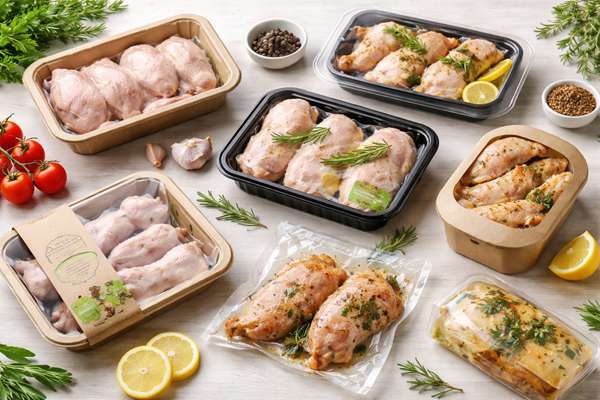
Increasing use of MAP packaging
Modified atmosphere packaging is becoming more common in fresh chicken retail packaging. It helps maintain product appearance and freshness, making it widely used for supermarket-ready poultry products. -
Rising popularity of vacuum skin packaging
Vacuum skin packaging is gaining popularity in premium retail markets. This packaging format provides better product presentation and helps keep the product securely fixed in the package. -
Sustainable packaging materials
Sustainability is becoming an important focus in food packaging. Many companies are exploring recyclable films, mono-material structures, and reduced-plastic packaging solutions. -
Higher level of packaging automation
As poultry processing volumes continue to increase, automated packaging lines are becoming more common. Automation helps improve production efficiency, ensure consistent packaging quality, and reduce labor costs.
Conclusion
In the chicken processing industry, different products and sales channels require different packaging methods.
By choosing the right packaging technology and chicken packaging machine, poultry processors can extend product shelf life, improve production efficiency, and make products more competitive.
If you are interested in chicken packaging machines, please contact us at [email protected]. Our technical team will be happy to assist you.